
black rhino guide
Black Rhino Guide: A Comprehensive Overview (Updated 12/22/2025)
Today, December 22, 2025, this guide details the precarious future of black rhinos, facing threats like poaching, habitat loss, and climate change, despite population recovery.
The black rhinoceros (Diceros bicornis) is a critically endangered species, a magnificent yet vulnerable creature facing immense challenges in the 21st century. Once numbering in the hundreds of thousands across Africa, their population tragically plummeted to fewer than 2,400 by the mid-1990s, a devastating consequence of relentless poaching and escalating habitat loss.
Thankfully, dedicated conservation initiatives have spurred a slow but encouraging rebound, with current estimates placing the population around 6,487 as of 2025. However, this recovery remains fragile, constantly threatened by the persistent demand for rhino horn on the black market and the ongoing pressures of a changing climate. This guide provides a comprehensive overview of the black rhino, exploring its biology, behavior, the threats it faces, and the crucial conservation efforts underway to secure its future.
Taxonomy and Classification
The black rhinoceros, scientifically known as Diceros bicornis, belongs to the family Rhinocerotidae and the order Perissodactyla – the odd-toed ungulates. The genus Diceros includes only one species, the black rhino, distinguishing it from the white rhinoceros (Ceratotherium simum).
Historically, several subspecies were recognized, but taxonomic revisions have led to ongoing debate. Current classifications generally acknowledge four subspecies, though genetic studies continue to refine our understanding of their relationships. The species’ name, bicornis, directly references the two horns typically present on the rhino’s snout. Understanding this taxonomic placement is crucial for targeted conservation strategies, recognizing the unique genetic heritage of this endangered animal.

Physical Characteristics of the Black Rhino
Black rhinos are powerfully built animals, exhibiting a distinctive hooked lip adapted for browsing on leaves and branches. Adults typically stand 1.4 to 1.8 meters (4.6 to 5.9 feet) tall at the shoulder and weigh between 800 and 1,400 kilograms (1,760 to 3,090 pounds).
Their thick, grey skin appears almost black in certain lighting, hence the common name. They possess two horns, composed of keratin – the same material as human fingernails – with the front horn generally longer than the rear one. These horns are used for defense, dominance displays, and foraging. Their relatively large ears contribute to excellent hearing, aiding in predator detection within their habitat.
Distinguishing Features: Black vs. White Rhino
The primary distinction between black and white rhinos lies in their lip shape. Black rhinos possess a pointed, prehensile lip, ideal for grasping leaves and branches while browsing. Conversely, white rhinos have a broad, square lip suited for grazing on grasses.
Beyond the lip, black rhinos are generally smaller than white rhinos, with a more arched back. White rhinos tend to have a prominent hump on their shoulders. While both species are grey, black rhinos often appear darker due to their habit of wallowing in mud. These differences reflect their distinct feeding strategies and ecological niches within their shared African habitats.

Habitat and Distribution
Black rhinos inhabit a variety of landscapes across eastern and southern Africa, though their historical range was far more extensive. They are found in dense bushland, savannah woodlands, and acacia thickets, requiring access to water sources. Currently, key populations reside in countries like Namibia, Kenya, and South Africa, collectively holding roughly 87% of the total black rhino population.
Historically, black rhinos roamed across a much wider geographical area, but agricultural development and European hunting dramatically reduced their distribution. Today, fragmented populations persist in protected areas and private reserves, highlighting the ongoing need for habitat preservation and restoration efforts to ensure their long-term survival.
Geographical Range: Current and Historical
Historically, black rhinos thrived across the entirety of sub-Saharan Africa, boasting an estimated 100,000 individuals in the early 1900s. Their range encompassed diverse ecosystems, from the dense forests of Central Africa to the expansive grasslands of the south. However, relentless hunting and habitat loss drastically curtailed their distribution.
Today, the black rhino’s geographical range is severely fragmented and reduced. Core populations are now concentrated in eastern and southern Africa, primarily within protected areas. Namibia, Kenya, and South Africa are crucial strongholds, collectively harboring approximately 87% of the remaining population. Sadly, their presence has been eliminated from many former habitats, emphasizing the urgency of conservation initiatives.
Preferred Environments and Ecosystems
Black rhinos demonstrate adaptability, inhabiting a variety of ecosystems, though they exhibit preferences. They are commonly found in dense thickets, shrublands, and woodlands, providing crucial cover and foraging opportunities. These environments offer protection from the sun and predators, alongside abundant vegetation.
Savannas and grasslands also form part of their habitat, particularly where acacia trees and other woody plants are present. Access to water sources is vital, leading them to frequent rivers, waterholes, and seasonal streams. Historically, they occupied a broader range of habitats, but fragmentation now restricts them to suitable, protected areas, highlighting the need for habitat preservation and restoration efforts.
Behavior and Ecology
Black rhinos are largely solitary creatures, except during mating or when a mother is with her calf. They establish territories, marked by dung heaps – “middens” – used for communication. These middens convey information about identity, reproductive status, and territorial boundaries to other rhinos.
Their activity patterns are flexible, adapting to environmental conditions. They spend significant time foraging, utilizing their prehensile lip to browse on leaves and branches. While generally peaceful, black rhinos can be aggressive, particularly when threatened or defending their territory. Understanding their behavioral ecology is crucial for effective conservation strategies, minimizing human-wildlife conflict and ensuring their survival.
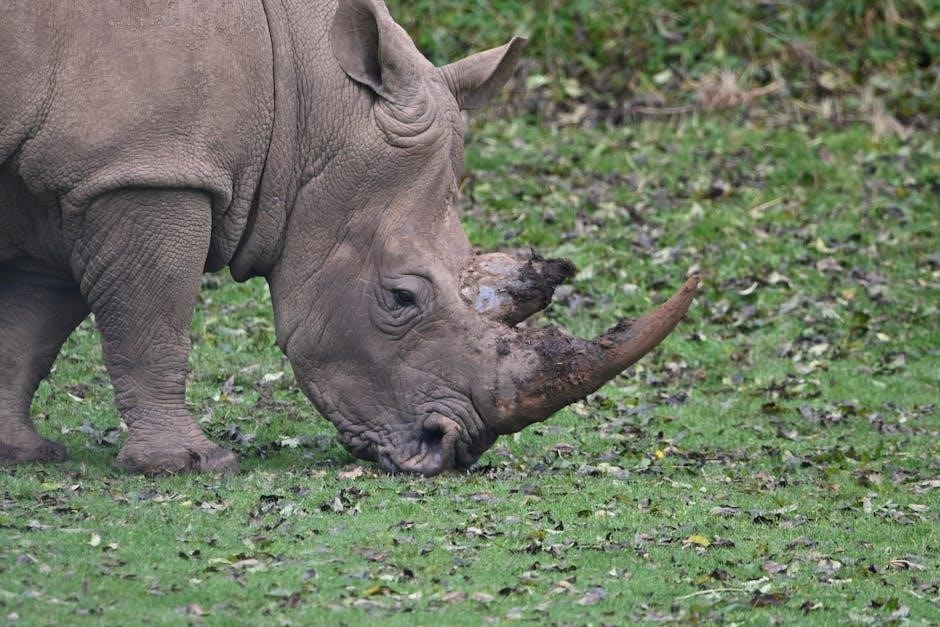
Social Structure and Solitary Nature
Black rhinos predominantly lead solitary lives, a behavioral trait influencing their social interactions. Encounters are often brief and aggressive, especially between males competing for territory or mating opportunities. Mothers maintain close bonds with their calves for extended periods, providing crucial protection and guidance.
While not forming herds, black rhinos utilize scent marking – dung heaps called “middens” – as a primary means of communication. These middens convey vital information about identity, reproductive status, and territorial boundaries. This solitary nature presents challenges for population monitoring and conservation, requiring innovative tracking and research methods to understand their distribution and behavior.
Diet and Feeding Habits
Black rhinos are primarily browsers, distinguishing them from their white rhino counterparts who graze on grasses. They utilize their pointed, prehensile lip to grasp leaves and twigs from bushes and trees, consuming a diverse range of plant species. This browsing behavior shapes their habitat preferences and influences vegetation structure.
Their diet consists of approximately 1.5 to 2.5% of their body weight daily, requiring significant foraging time. Black rhinos are selective feeders, choosing nutrient-rich foliage. Access to sufficient food resources is crucial for their health and reproductive success, making habitat quality a key factor in their conservation; Water intake is also vital, especially during drier periods.
Communication Methods
Black rhinos employ a variety of communication methods, though they are generally solitary creatures. Scent marking plays a crucial role, utilizing dung heaps – called middens – to convey information about identity, reproductive status, and territory boundaries to other rhinos. These middens are strategically placed along frequently used paths.
Vocalizations are also important, including snorts, bellows, and growls, used in interactions with other rhinos, particularly during mating season or when establishing dominance. Body language, such as ear positioning and head movements, further enhances communication. While less frequent, tactile communication, like rubbing, can occur between mothers and calves, strengthening their bond.
Reproduction and Life Cycle
Black rhino reproduction is a slow process, contributing to their vulnerability. Mating rituals involve scent marking and vocalizations, with males competing for access to females. Gestation lasts approximately 15-18 months, resulting in the birth of a single calf, rarely twins. Calves are typically born weighing between 35-50 kg (77-110 lbs).
Parental care is primarily provided by the mother, who nurses the calf for up to two years. Calves remain dependent on their mothers for protection and learning essential survival skills for several years. Black rhinos reach sexual maturity around 5-7 years of age, and their lifespan in the wild averages 35-50 years.
Mating Rituals and Gestation Period
Black rhino mating is a complex affair, initiated by scent marking and vocalizations from both sexes. Males actively seek out females in estrus, often engaging in competitive displays and fights to establish dominance. These rituals can involve sparring and chasing, demonstrating physical prowess.
The gestation period for a black rhino is remarkably long, lasting between 15 and 18 months. This extended gestation contributes to their slow reproductive rate. Typically, a single calf is born, though twins are rare. Successful mating and a healthy gestation are crucial for population growth, given the species’ endangered status.
Calf Development and Parental Care
A newborn black rhino calf typically weighs between 35 and 50 kilograms, relying heavily on its mother for the first several months of life. The calf remains close to its mother, learning essential survival skills like foraging and recognizing danger. Mothers are fiercely protective, defending their young against predators and other threats.

Calves begin to graze on vegetation within the first week, supplementing their mother’s milk. This early introduction to solid food is vital for healthy development. The mother-calf bond is strong and lasts for several years, with the calf gradually becoming more independent as it matures, eventually venturing off on its own.
Lifespan and Mortality Rates
Black rhinos typically live between 35 and 50 years in the wild, though some individuals may survive longer under optimal conditions. However, mortality rates are significantly impacted by external factors, particularly poaching and habitat loss. Calves face a high risk of predation and disease during their early years, contributing to a substantial mortality rate in the first few months of life.
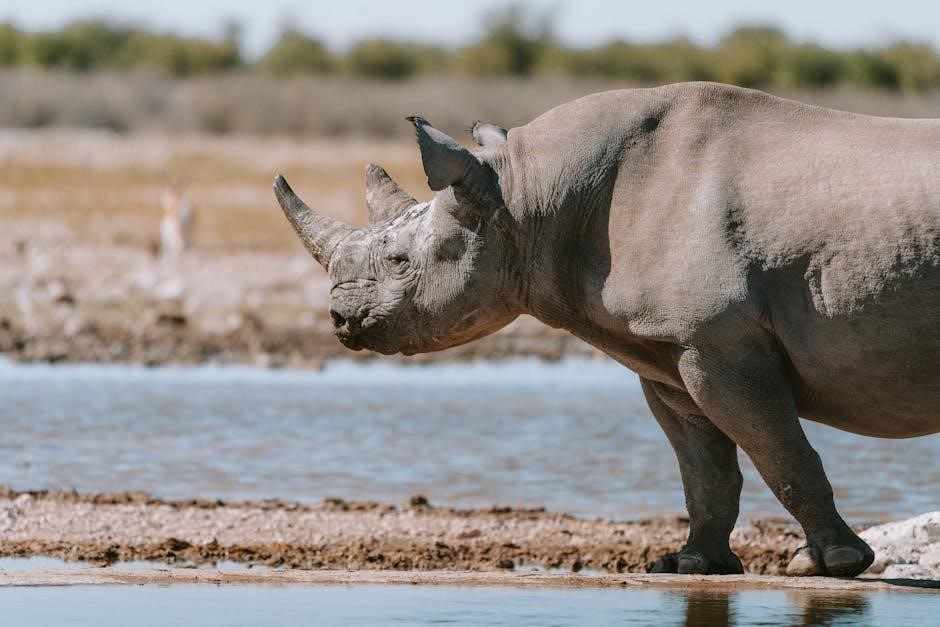
Adult rhinos are less vulnerable to predation, but remain susceptible to poaching, which is the primary driver of mortality. Habitat fragmentation also increases mortality risk by limiting access to resources and increasing conflict with humans. Conservation efforts aim to reduce these threats and improve overall survival rates.
Threats to Black Rhino Populations
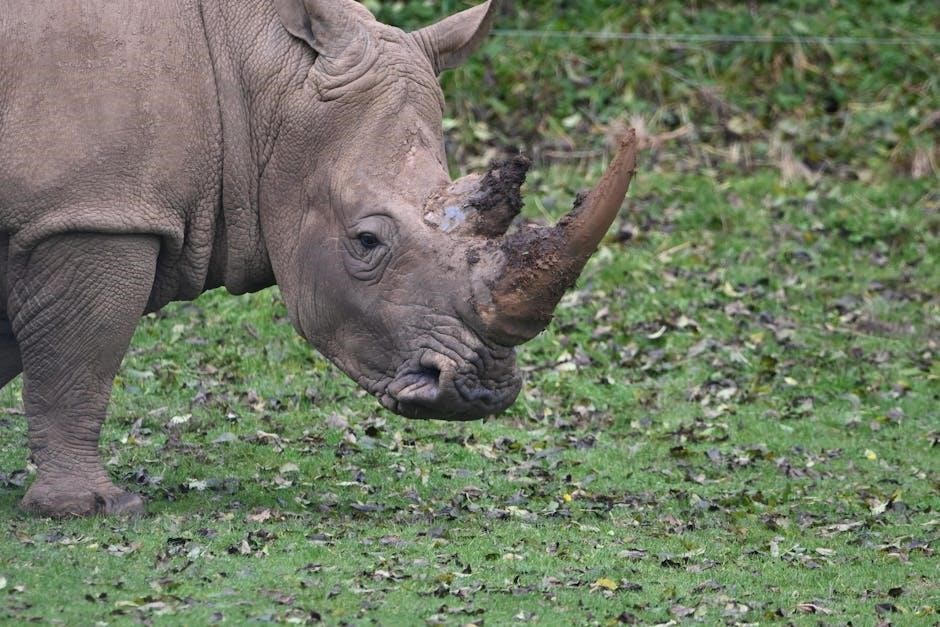
Black rhinos face a multitude of severe threats, pushing them towards extinction despite recent conservation gains. Poaching remains the most significant danger, driven by the high demand for rhino horn in illegal markets. Habitat loss and fragmentation, stemming from agricultural expansion and human settlement, further exacerbate the problem, limiting resources and increasing vulnerability.
Climate change presents an emerging threat, altering ecosystems and potentially impacting food availability and water sources. Historically, uncontrolled hunting and land clearance decimated populations, reducing numbers from an estimated 100,000 in the early 1900s to fewer than 2,400 by the mid-1990s. Addressing these interconnected challenges is crucial for long-term survival.
Poaching: The Primary Threat
Poaching represents the most immediate and devastating threat to black rhino populations, fueled by the persistent demand for their horns in illegal wildlife trade. These horns are falsely believed to possess medicinal properties in some cultures, driving a lucrative black market. This demand incentivizes organized criminal networks to target rhinos, resulting in significant population declines.
The drastic reduction from an estimated 100,000 in the early 1900s to under 2,400 by the mid-1990s was largely attributable to unchecked poaching. Despite increased anti-poaching efforts, the threat remains substantial, requiring continuous vigilance and innovative strategies to protect these vulnerable animals from relentless exploitation and potential extinction.
Habitat Loss and Fragmentation
Alongside poaching, habitat loss and fragmentation pose a critical long-term threat to black rhino survival. Historically, extensive land clearance for agricultural development and human settlement dramatically reduced the available range for these animals. This shrinking habitat not only diminishes the overall population capacity but also isolates rhino populations, hindering genetic diversity.
The conversion of natural ecosystems into farmland and urban areas creates fragmented landscapes, restricting rhino movement and access to vital resources like food and water. This isolation increases vulnerability to inbreeding and reduces resilience to environmental changes. Addressing habitat loss requires sustainable land-use planning and dedicated conservation efforts to restore and connect fragmented habitats.
Climate Change Impacts
Climate change presents an increasingly significant, yet often overlooked, threat to black rhino populations. Altered weather patterns, including prolonged droughts and increased frequency of extreme weather events, directly impact their access to essential resources like water and forage. These changes can exacerbate existing pressures from habitat loss and poaching, pushing already vulnerable populations closer to the brink.
Shifts in vegetation patterns due to changing temperatures and rainfall also affect rhino diet and nutritional intake. Furthermore, climate change may facilitate the spread of diseases, impacting rhino health and survival rates. Mitigating these impacts requires a holistic conservation approach that incorporates climate resilience strategies and international cooperation to address global emissions.
Conservation Efforts
Robust conservation initiatives are crucial for securing the future of black rhinos. Organizations like WWF are actively engaged in protecting these magnificent creatures, focusing on three key range countries: Namibia, Kenya, and South Africa, which collectively harbor approximately 87% of the total black rhino population.
These efforts encompass a multi-faceted approach, including intensive anti-poaching strategies utilizing advanced technologies, dedicated habitat preservation and restoration projects, and vital community-based conservation programs. Success hinges on fostering collaboration between governments, conservation groups, and local communities, ensuring sustainable solutions that benefit both wildlife and people. Continued funding and international cooperation are paramount.
WWF’s Initiatives in Namibia, Kenya, and South Africa
WWF prioritizes black rhino conservation within Namibia, Kenya, and South Africa, recognizing these nations collectively safeguard a significant 87% of the remaining population. In Namibia, WWF supports community-based natural resource management, empowering local communities to protect rhinos and benefit from their presence.
Kenya’s initiatives focus on strengthening anti-poaching patrols and utilizing technology for monitoring. South Africa’s programs concentrate on intensive wildlife management, including translocation to establish new populations and secure existing strongholds. These collaborative efforts aim to bolster rhino numbers, combat poaching effectively, and ensure long-term species survival through integrated conservation strategies.
Anti-Poaching Strategies and Technologies
Combating poaching requires a multi-faceted approach, integrating advanced technologies with traditional anti-poaching methods. WWF and partner organizations employ sophisticated tracking systems, including GPS collars and camera traps, to monitor rhino movements and detect potential threats. Drone surveillance provides aerial views, enabling rapid response to poaching incidents.
Furthermore, canine units are utilized for scent detection, enhancing the ability to locate illegal rhino horn. Strengthening law enforcement capacity through ranger training and equipping them with necessary resources is crucial. Crucially, community involvement in reporting suspicious activity serves as a vital early warning system, bolstering overall anti-poaching effectiveness.
Habitat Preservation and Restoration
Protecting and restoring black rhino habitats is paramount for their long-term survival, addressing the historical loss of land for agriculture and settlement. WWF focuses on securing key rhino ranges in Namibia, Kenya, and South Africa, working with governments and local communities to establish protected areas and wildlife corridors.
Restoration efforts involve removing invasive species, re-establishing native vegetation, and improving water availability. Maintaining habitat connectivity allows rhinos to move freely, access resources, and maintain genetic diversity. Sustainable land-use practices, promoting coexistence between wildlife and humans, are also vital. These initiatives aim to reverse decades of habitat degradation and fragmentation, ensuring a secure future for black rhinos.
Population Trends and Recovery
Historically, black rhino populations plummeted from an estimated 100,000 in the early 1900s to fewer than 2,400 by the mid-1990s, a devastating 98% decline attributed to relentless poaching and habitat loss. However, dedicated conservation efforts have spurred a slow but significant recovery.

As of 2025, current estimates place the black rhino population at approximately 6,487 individuals. This positive trend demonstrates the effectiveness of anti-poaching strategies and habitat preservation. Measuring recovery involves monitoring population size, distribution, and genetic diversity. Predicting future impact requires ongoing research and adaptive management, ensuring sustained conservation success for this iconic species.
Historical Population Decline (Early 1900s — 1990s)
During the early 20th century, Africa boasted an estimated 100,000 black rhinos. However, a dramatic decline commenced, fueled by European colonization and subsequent land clearance for agriculture. Uncontrolled hunting, driven by sport, meat consumption, and the lucrative rhino horn trade, decimated populations.
By the mid-1990s, the black rhino faced near extinction, with numbers plummeting to fewer than 2,400. This represented a catastrophic 98% reduction in population size over less than a century. Extensive hunting combined with habitat loss created a perfect storm, pushing the species to the brink. This period highlights the devastating impact of human activity on wildlife.
Current Population Estimates (as of 2025)
Fortunately, dedicated conservation initiatives have spurred a slow but encouraging rebound in black rhino numbers. As of December 22, 2025, current estimates place the total black rhino population at approximately 6,487 individuals. This represents a significant increase from the low of under 2,400 in the mid-1990s, demonstrating the positive impact of focused conservation efforts.
However, this recovery remains fragile. Approximately 87% of the total black rhino population resides within three key range countries: Namibia, Kenya, and South Africa. Continued monitoring and robust anti-poaching measures are crucial to sustain this progress and prevent a reversal of these gains, ensuring the species’ long-term survival.
Measuring Recovery and Predicting Future Impact
Assessing black rhino recovery requires multifaceted analysis beyond simple population counts. Scientists are employing advanced techniques to monitor vital rates – birth rates, mortality rates, and dispersal patterns – providing insights into population health and growth potential. Furthermore, genetic diversity assessments are crucial, ensuring the population maintains sufficient adaptability.
Predicting future impact necessitates modeling the interplay of threats. Factors like poaching intensity, habitat availability, and climate change scenarios are integrated to forecast population trajectories. A recent analysis offers exciting potential, highlighting the importance of sustained conservation funding and international collaboration to secure a positive future for these magnificent creatures.
The Role of Local Communities in Conservation
Successful black rhino conservation fundamentally depends on the active participation of local communities. Community-based conservation programs empower residents to become stewards of wildlife, fostering a sense of ownership and responsibility. These initiatives often provide alternative livelihoods, reducing reliance on activities that threaten rhinos, such as poaching or habitat encroachment.
Sustainable tourism, when managed responsibly, generates economic benefits for communities, incentivizing rhino protection. Revenue from tourism can fund local development projects, including education and healthcare, further strengthening community support for conservation. Integrating local knowledge and traditional practices into conservation strategies enhances their effectiveness and long-term sustainability.
Community-Based Conservation Programs
Effective community-based programs are pivotal for black rhino survival, shifting conservation from top-down approaches to collaborative efforts. These programs actively involve local residents in monitoring rhino populations, reporting poaching incidents, and protecting critical habitats. Crucially, they provide alternative income sources, lessening dependence on unsustainable practices.
Examples include employing community members as rangers, guides, or in eco-tourism ventures. Successful initiatives prioritize benefit-sharing, ensuring communities directly profit from rhino conservation. Education programs raise awareness about the importance of rhinos and the consequences of illegal wildlife trade, fostering a conservation ethic. Empowering local communities is not merely ethical, but strategically vital for long-term success.
Sustainable Tourism and Economic Benefits
Responsible tourism offers a vital economic incentive for black rhino conservation, transforming local perceptions and fostering stewardship. Well-managed eco-tourism generates revenue that directly supports anti-poaching efforts, habitat preservation, and community development initiatives. This creates a tangible link between rhino survival and local livelihoods.
Revenue streams from tourism fund essential conservation programs, providing sustainable financing beyond donor dependency. Opportunities include guided wildlife safaris, photographic tours, and cultural experiences that showcase the region’s natural heritage. Crucially, tourism must be carefully regulated to minimize disturbance to rhinos and their habitat, ensuring long-term ecological integrity; Economic benefits empower communities to become active partners in conservation.
Future Outlook and Challenges

The future of the black rhino remains uncertain, despite recent population gains. Addressing persistent threats – poaching driven by black market demand, escalating habitat loss, and the intensifying impacts of climate change – is paramount. Sustained international cooperation, bolstered by adequate funding, is crucial for long-term success.
Emerging infectious diseases pose a new, potentially devastating threat, requiring proactive monitoring and research. Integrating local communities into conservation efforts is essential, ensuring they benefit directly from rhino preservation. Predicting the impact of future conservation requires continuous data analysis and adaptive management strategies. Ultimately, securing a future for black rhinos demands a holistic, collaborative, and resilient approach.
Addressing Poaching, Habitat Loss, and Climate Change
Combating poaching requires strengthening anti-poaching strategies and employing advanced technologies to protect rhinos. Simultaneously, mitigating habitat loss demands preserving existing habitats and actively restoring fragmented ecosystems. Climate change necessitates understanding its impacts on rhino distribution and food sources, implementing adaptation measures.
Effective solutions involve collaborative efforts between governments, conservation organizations like WWF, and local communities. Increased law enforcement, demand reduction campaigns for rhino horn, and sustainable land-use planning are vital. Addressing climate change requires global action to reduce emissions and support climate resilience initiatives within rhino range states. A multi-faceted approach is essential for long-term success.
The Importance of International Cooperation
Black rhino conservation transcends national boundaries, demanding robust international cooperation. Poaching networks operate across continents, necessitating coordinated law enforcement and intelligence sharing between countries. Demand for rhino horn originates primarily from Asian markets, requiring collaborative efforts to reduce consumption and disrupt trafficking routes.
Financial support from developed nations is crucial for funding conservation initiatives in range states. Joint research programs can enhance understanding of rhino ecology and inform effective conservation strategies. International agreements and treaties, like CITES, play a vital role in regulating trade and protecting endangered species. Sustained collaboration is paramount for securing the future of black rhinos.
Emerging Infectious Diseases as a Potential Threat
Beyond poaching and habitat loss, emerging infectious diseases represent a growing, yet often overlooked, threat to black rhino populations. Limited genetic diversity within rhino populations can increase their susceptibility to novel pathogens. Disease outbreaks could rapidly decimate already vulnerable groups, hindering conservation progress.
Monitoring rhino health and conducting proactive disease surveillance are crucial preventative measures. Collaboration between wildlife veterinarians, researchers, and local communities is essential for early detection and rapid response. Understanding pathogen transmission dynamics and developing effective treatment strategies are vital. Addressing this emerging threat requires increased investment in wildlife health research and preparedness.
Related Posts

asvab mechanical study guide
Struggling with the ASVAB Mechanical Comprehension? This guide breaks down tricky concepts with clear explanations & practice questions. Boost your score now!

seidel’s guide to physical examination 10th edition pdf free
Need the latest Seidel’s Guide to Physical Examination? Download the 10th edition PDF for free! Perfect for students & healthcare pros. Access now!

cowin e7 user guide
Unlock the full potential of your Cowin E7 headphones! Our easy-to-follow guide covers everything from pairing to troubleshooting. Download now & enjoy!