bio final study guide
Biology Final Exam Study Guide
Prepare for success! This guide aids study, covering diverse life, cell processes, genetics, and evolution – essential for a comprehensive biology exam review.
Biology, the study of life, begins with systematic observation and questioning. The scientific method is crucial: forming a hypothesis, conducting experiments, analyzing data, and drawing conclusions.
Understand the characteristics defining life – organization, metabolism, growth, adaptation, response to stimuli, and reproduction. Distinguish between inductive and deductive reasoning.
Key vocabulary includes abiotic and biotic factors, essential for ecological understanding. Mastering experimental design – control groups, variables (independent, dependent) – is vital.
Remember, a robust understanding of these foundational principles will underpin success throughout the entire biology course and final exam!

II. Basic Biochemistry
Basic biochemistry explores the molecules essential for life. Focus on the four major biomolecules: carbohydrates (sugars, starches), lipids (fats, oils – crucial for energy storage and insulation), proteins (amino acid chains – enzymes, structural components), and nucleic acids (DNA, RNA – genetic information).
Understand the monomers and polymers of each. Enzymes are biological catalysts, speeding up reactions.
Know how factors like temperature and pH affect enzyme activity.

Be prepared to identify which biomolecule fulfills specific functions within a cell. A solid grasp of these concepts is fundamental for understanding cellular processes and will be heavily tested on the final exam.

A. Biomolecules: Carbohydrates, Lipids, Proteins, Nucleic Acids
Carbohydrates provide quick energy (glucose, fructose) and structural support (cellulose). Lipids offer long-term energy storage (fats, oils) and insulation. Proteins have diverse functions – enzymes catalyze reactions, antibodies defend, and structural proteins build tissues; they are built from amino acids.
Nucleic acids – DNA and RNA – store and transmit genetic information.
Understand the monomers (building blocks) of each: monosaccharides for carbohydrates, fatty acids & glycerol for lipids, amino acids for proteins, and nucleotides for nucleic acids.
Know how these molecules polymerize (join together) and depolymerize (break apart). Mastering these structures is vital for the biology final.
B. Enzymes and their Function
Enzymes are biological catalysts – they speed up chemical reactions without being consumed. They achieve this by lowering the activation energy needed for a reaction to occur. Each enzyme has a specific active site that binds to a particular substrate.
Factors influencing enzyme activity include temperature, pH, and substrate concentration.
Understand enzyme-substrate complex formation and how it leads to product creation.
Denaturation – changes in shape due to unfavorable conditions – can render an enzyme non-functional.
Knowing enzyme function is crucial for understanding metabolic pathways and cellular processes on the biology final exam.
III. Cell Structure and Function
Cells are the fundamental units of life, exhibiting remarkable structural organization. Understanding cell types – prokaryotic and eukaryotic – is essential. Prokaryotic cells, like bacteria, lack a nucleus and membrane-bound organelles, while eukaryotic cells, found in plants and animals, possess both.
Key cellular components include the cell membrane, cytoplasm, and genetic material (DNA).
Focus on the distinct features of each cell type and their implications for function.
Mastering cell structure provides a foundation for comprehending complex biological processes. Prepare to identify structures and their roles on the biology final exam.
A. Prokaryotic vs. Eukaryotic Cells
Prokaryotic cells, representing ancient life forms like bacteria, are simpler, lacking a nucleus and other membrane-bound organelles. Their DNA resides in a nucleoid region. Eukaryotic cells, found in plants, animals, fungi, and protists, are more complex, featuring a true nucleus housing their DNA and specialized organelles.
Key differences include size, internal organization, and reproductive mechanisms. Prokaryotes reproduce asexually, while eukaryotes can reproduce both sexually and asexually.
Understanding these distinctions is crucial for grasping the diversity of life and evolutionary relationships. Prepare to compare and contrast these cell types on the biology final exam.
B. Organelles and their Roles
Eukaryotic cells contain various organelles, each performing specific functions. The nucleus controls cellular activities, while ribosomes synthesize proteins. Mitochondria generate energy through cellular respiration, and the endoplasmic reticulum (ER) facilitates protein and lipid synthesis.
The Golgi apparatus processes and packages proteins, lysosomes break down waste materials, and vacuoles store water and nutrients. Chloroplasts (in plant cells) conduct photosynthesis.
Mastering the structure and function of these organelles is vital for understanding cellular processes. Expect detailed questions on the biology final exam regarding organelle roles and interdependencies.
IV. Cellular Processes
Cellular processes are fundamental to life, encompassing energy production and utilization. Cellular respiration breaks down glucose to generate ATP, involving glycolysis, the Krebs cycle, and the electron transport chain. Understanding each stage and its location within the cell is crucial.
Photosynthesis, conversely, uses light energy to synthesize glucose. This process consists of light-dependent and light-independent (Calvin cycle) reactions.
Expect exam questions comparing and contrasting these processes, including their reactants, products, and overall significance for organisms. A strong grasp of these concepts is essential for success on the biology final;

A. Cellular Respiration: Glycolysis, Krebs Cycle, Electron Transport Chain
Cellular respiration unlocks energy from glucose in three key stages. Glycolysis, occurring in the cytoplasm, breaks down glucose into pyruvate, yielding a small ATP gain. The Krebs cycle (Citric Acid Cycle), within the mitochondrial matrix, further oxidizes pyruvate, releasing carbon dioxide and generating electron carriers.
Finally, the electron transport chain, located in the inner mitochondrial membrane, utilizes these carriers to create a proton gradient, driving ATP synthase for substantial ATP production.
Be prepared to detail each stage’s inputs, outputs, and location; understanding the interconnectedness is vital for the biology final exam.
B. Photosynthesis: Light-Dependent & Light-Independent Reactions
Photosynthesis converts light energy into chemical energy, fueling life on Earth. It unfolds in two main stages. The light-dependent reactions, occurring in the thylakoid membranes, capture sunlight to produce ATP and NADPH, releasing oxygen as a byproduct.
Subsequently, the light-independent reactions (Calvin Cycle), taking place in the stroma, utilize ATP and NADPH to fix carbon dioxide into glucose.
Mastering the inputs, outputs, and locations of each stage is crucial. Understand how these reactions are interconnected and how environmental factors influence photosynthetic rates for your biology final exam.
V. Genetics and Heredity
Genetics explores the mechanisms of inheritance, starting with the structure of DNA – a double helix carrying genetic information. DNA replication ensures accurate duplication of this information before cell division. Understanding the roles of nucleotides, base pairing, and enzymes is vital.
Mendelian genetics introduces concepts like dominant and recessive alleles, genotypes, and phenotypes. Punnett squares predict inheritance patterns, revealing probabilities of offspring traits.

Familiarize yourself with inheritance patterns like complete dominance, incomplete dominance, and codominance for a thorough biology final exam preparation.
A. DNA Structure and Replication
DNA, deoxyribonucleic acid, possesses a distinctive double helix structure, composed of nucleotides – each containing a deoxyribose sugar, a phosphate group, and a nitrogenous base (adenine, thymine, guanine, cytosine). Base pairing rules (A with T, G with C) are fundamental.
Replication is the process of creating two identical DNA copies from one original DNA molecule. Enzymes like DNA polymerase play a crucial role, unwinding the helix, adding complementary bases, and proofreading for errors.
Understanding leading and lagging strands, Okazaki fragments, and the overall semi-conservative nature of replication is key for the biology final.
B. Mendelian Genetics: Punnett Squares, Inheritance Patterns
Mendelian genetics, established by Gregor Mendel, explores inheritance patterns. Punnett squares are diagrams predicting offspring genotypes and phenotypes based on parental alleles.
Key concepts include dominant and recessive alleles, homozygous and heterozygous genotypes, and the principles of segregation and independent assortment. Understanding monohybrid and dihybrid crosses is vital.
Common inheritance patterns include autosomal dominant, autosomal recessive, and sex-linked traits. Predicting probabilities of inheriting specific traits, and interpreting pedigree charts are essential skills for the biology final exam.
VI. Cell Division
Cell division is fundamental for growth, repair, and reproduction. Mitosis produces two identical daughter cells, crucial for asexual reproduction and tissue repair, maintaining the same chromosome number.
Meiosis, conversely, generates four genetically diverse haploid gametes (sperm and egg), essential for sexual reproduction, reducing chromosome number by half.
Understanding the stages of each process – prophase, metaphase, anaphase, telophase – and their respective events is critical. Knowing the purpose and final products of mitosis and meiosis, alongside their effect on DNA, will be heavily tested on the biology final.
A. Mitosis: Stages, Purpose, and Products
Mitosis is a carefully orchestrated process resulting in two genetically identical daughter cells from a single parent cell. Its primary purpose is growth and repair of tissues, ensuring consistent genetic information.
The stages – prophase (chromosomes condense), metaphase (alignment at the equator), anaphase (sister chromatids separate), and telophase (new nuclei form) – must be memorized.
The final products are two diploid cells, each with the same number of chromosomes as the original. Understanding how mitosis affects DNA – it duplicates and then divides equally – is vital for the biology final exam.
B. Meiosis: Stages, Purpose, and Products – Gamete Formation
Meiosis is a specialized cell division process crucial for sexual reproduction, resulting in four genetically unique haploid daughter cells – gametes (sperm and egg). Its purpose is to reduce chromosome number by half, maintaining a constant chromosome count across generations.
Meiosis consists of two rounds of division: Meiosis I and Meiosis II, each with prophase, metaphase, anaphase, and telophase stages. Key events include crossing over and independent assortment, promoting genetic diversity.

The final products are four haploid cells, essential for gamete formation and ensuring genetic variation in offspring – a core concept for the biology final.
VII. Evolution and Natural Selection
Evolution, the change in heritable characteristics of biological populations over successive generations, is driven by natural selection. This process favors individuals with traits better suited to their environment, increasing their survival and reproductive success.
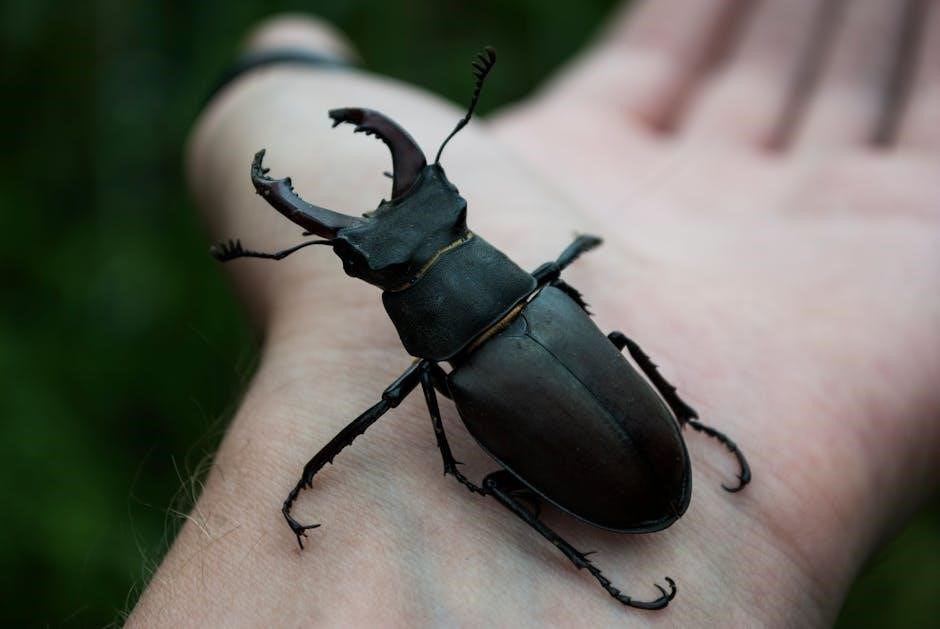
Key concepts include variation within populations, inheritance of traits, differential survival and reproduction, and adaptation over time. Evidence for evolution comes from fossil records, comparative anatomy, embryology, and molecular biology.
Understanding these principles is vital for the biology final, as they explain the diversity of life and the interconnectedness of all organisms – a cornerstone of biological study.
VIII. Ecology and Ecosystems
Ecology examines the interactions between organisms and their environment. Ecosystems encompass both biotic (living) and abiotic (non-living) factors, like temperature, water, and nutrients, influencing species distribution and abundance.
Food webs illustrate energy flow through trophic levels – producers, consumers, and decomposers. Energy transfer isn’t efficient; much is lost as heat. Understanding these dynamics is crucial for comprehending ecosystem stability and resilience.
For the biology final, focus on concepts like population dynamics, community interactions, and the impact of human activities on ecological balance – vital for a holistic understanding.
A; Abiotic and Biotic Factors
Abiotic factors – non-living components – profoundly shape ecosystems. These include sunlight, temperature, water availability, soil composition, and pH levels. They dictate which organisms can survive in a given environment, influencing distribution and adaptations.
Conversely, biotic factors encompass all living organisms: plants, animals, fungi, and bacteria. Interactions like predation, competition, symbiosis, and disease significantly impact population sizes and community structure.
For your biology final exam, understand how these factors interconnect. Consider how a change in one abiotic factor (e.g., rainfall) can cascade through the ecosystem, affecting multiple biotic components.
B. Food Webs and Energy Flow
Ecosystems rely on a complex network of feeding relationships represented by food webs. Unlike simple food chains, food webs illustrate the interconnectedness of various organisms and their multiple food sources.
Energy flow is crucial; it begins with producers (autotrophs) capturing energy from sunlight via photosynthesis. This energy is then transferred to consumers (heterotrophs) through feeding. However, energy transfer isn’t efficient – approximately 90% is lost as heat at each trophic level.
For your biology final exam, grasp the concepts of trophic levels, energy pyramids, and the 10% rule. Understand how disruptions to food webs can have cascading effects throughout the ecosystem.
IX. Diversity of Life
The incredible diversity of life on Earth is organized through a hierarchical classification system. This begins with three Domains – Bacteria, Archaea, and Eukarya – reflecting fundamental evolutionary relationships.
Within these Domains lie several Kingdoms: Plants, Animals, Fungi, Protists, and Bacteria. Each kingdom exhibits unique characteristics, including cell structure, mode of nutrition, and reproductive strategies.
For your biology final exam, familiarize yourself with the key features defining each kingdom. Understand the basis for classifying organisms and the evolutionary connections between them. Knowing examples within each kingdom will be beneficial!
A. Classification of Organisms (Domains & Kingdoms)

Organisms are systematically categorized using a hierarchical classification system, starting with broad Domains. The three Domains – Bacteria, Archaea, and Eukarya – represent fundamental differences in cellular structure and molecular data;
Each Domain contains multiple Kingdoms. Eukarya, for example, encompasses the Kingdoms Protista, Fungi, Plantae, and Animalia. This system reflects evolutionary relationships, grouping organisms based on shared ancestry;
Understanding the criteria used to define each Domain and Kingdom is crucial. Consider cell type (prokaryotic vs. eukaryotic), cell structure, and nutritional modes. This foundational knowledge is essential for your biology final exam!
B. Key Characteristics of Major Kingdoms (Plants, Animals, Fungi, Protists, Bacteria)
Plants are autotrophic, utilizing photosynthesis. Animals are heterotrophic, exhibiting complex organization and movement. Fungi are also heterotrophic, absorbing nutrients from their surroundings, often as decomposers.
Protists are a diverse group, mostly unicellular eukaryotes, some autotrophic, others heterotrophic. Bacteria are prokaryotic, unicellular organisms with diverse metabolic strategies.
Key distinctions include cell wall composition (plants & fungi), modes of nutrition, and levels of organization. Recognizing these characteristics is vital for identifying organisms and understanding their ecological roles. Mastering these kingdom distinctions will significantly aid your preparation for the biology final exam!
Related Posts

asvab mechanical study guide
Struggling with the ASVAB Mechanical Comprehension? This guide breaks down tricky concepts with clear explanations & practice questions. Boost your score now!

seidel’s guide to physical examination 10th edition pdf free
Need the latest Seidel’s Guide to Physical Examination? Download the 10th edition PDF for free! Perfect for students & healthcare pros. Access now!

cowin e7 user guide
Unlock the full potential of your Cowin E7 headphones! Our easy-to-follow guide covers everything from pairing to troubleshooting. Download now & enjoy!